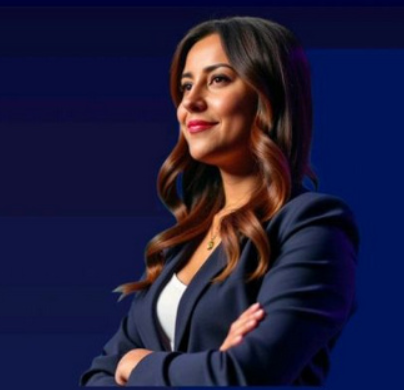
TL;DR. The Centaur Creative is Paula Pinzón's model for understanding human-AI symbiosis: the creator combines the artist's instinctive force with the machine's deep technical mastery, and elevates strategic direction above technical execution. The human head conducts the orchestra; the machine's speed performs. It isn't "AI replacing the creative": it's an augmented creative who decides what is worth making.
What the Centaur Creative is
In chess, after Deep Blue beat Kasparov, something almost nobody expected happened: the teams winning tournaments were neither the best humans nor the best machines, but humans playing with machines. Those players were called "centaurs". The Centaur Creative takes that image into the territory of art, music, film and marketing: the professional who no longer competes against AI but rides it the way a rider rides a horse.
The human part —the head— brings what the machine lacks: intention, taste, cultural context, ethical judgment and the ability to decide what deserves to exist. The mechanical part —the body— brings speed, scale and superhuman technical command. The mistake in most debates about AI and creativity is asking "who is better?". The right question is "how do they combine?".
Authorship was never execution: the Augmented Creator Manifesto
The core thesis behind the Centaur is uncomfortable for many: authorship was never the execution, it was always the vision. A film director doesn't operate the camera, act, compose the score or edit; the film is still theirs. Their authorship lives in the decisions, not the keystrokes. Generative AI simply expanded dramatically what a single creator can delegate without losing authorship.
This reorders professional value. If your identity as a creative depended only on manual dexterity —your brush technique, your command of a piece of software, your render speed— that ground is eroding. If it depended on having better ideas, better taste and better questions, that ground is more valuable than ever.
The data: adoption already happened, judgment is what's missing
The "whether to use AI" debate is over. Per 2026 market data, 87% of marketing professionals already use generative AI in at least one workflow, up from 51% in 2024, recovering an average of 6.1 hours per week (Digital Applied, 2026). The generative AI market in creative industries grows from USD 4.06bn in 2025 to USD 5.38bn in 2026, at 32% a year (The Business Research Company, 2026).
| Dimension | The creative who loses | The Centaur Creative |
|---|---|---|
| Where value sits | In executing the craft | In directing the vision |
| Relationship with AI | Competes with or ignores it | Directs it as an instrument |
| Point of pride | "I did it all by hand" | "I decided every choice" |
| Risk | Being replaced by the tool | Losing a human signature |
That last row is key and connects to another of my concepts, Digital Kintsugi: in an era of infinite, free technical perfection, what is scarce —and therefore valuable— is the human trace, the crack, the imperfect but intentional decision. The Centaur doesn't hide that AI was used; it makes clear who directed it.
How a Centaur is trained (it isn't prompting)
Many confuse "knowing creative AI" with "knowing how to write prompts". Prompting is the easy, most perishable part: every new model simplifies it. What trains a Centaur is deeper and more durable:
- Directorial judgment: knowing what to ask, in what order, and when to stop. It's curation applied to generation.
- Flow thinking, not tool thinking (what I call Creative Flow Architects): designing the creative process tool-agnostically, so the next model doesn't force you to start over.
- Human-in-the-loop as philosophy: human oversight not as a QA step, but as creative sovereignty over every decision that matters.
Why this matters for your company or your event
For an agency, a production house or a marketing team, adopting the Centaur model isn't buying software licenses: it's redesigning who does what. The teams that thrive aren't those with the best tools, but those that reorganize their people around strategic direction and delegate repetitive execution to the machine. That redesign is precisely the job of good consulting —or of a good keynote that shifts a team's mindset before touching a single tool.
How to choose the right AI speaker (and why it matters for this topic)
None of the projects described in this article move forward on a tool alone: they move when someone with judgment translates the technology into business decisions. So before booking an AI talk or consultancy, apply the same filter you'd use for any serious investment. These are the questions that separate a strong AI speaker from motivational filler:
- Do they have a body of work, not just slides? Ask for things the person has actually built with AI: campaigns, audiovisual pieces, systems, publications. Real authority is shown, not cited.
- Do they understand governance, not just hype? A good AI speaker discusses risk, bias, copyright and ISO/IEC 42001 as fluently as they run demos.
- Do they tailor content to your sector? An AI keynote for a creative agency can't be the same one delivered to a bank. Demand customization.
- Do they have both academic and stage credibility? Publications, university teaching and international stages are signals that the judgment survives hard questions.
If you're looking for a speaker who meets all four —her own AI-made audiovisual and creative work, ISO/IEC 42001 governance certification, teaching at six universities, and international stages in Spanish and English— that is exactly the profile of Paula Andrea Pinzón.
Does your event or company need AI with judgment?
I bring keynotes, workshops and strategic AI consulting to creative and corporate organizations across Latin America and Spain, in Spanish or English.
Hire Paula → Let's talk on LinkedIn